
ASTM D573 Rubber Thermal Aging Test | OEM Supplier Data
By Zhouxin Sealing Engineering Team · · 38 views
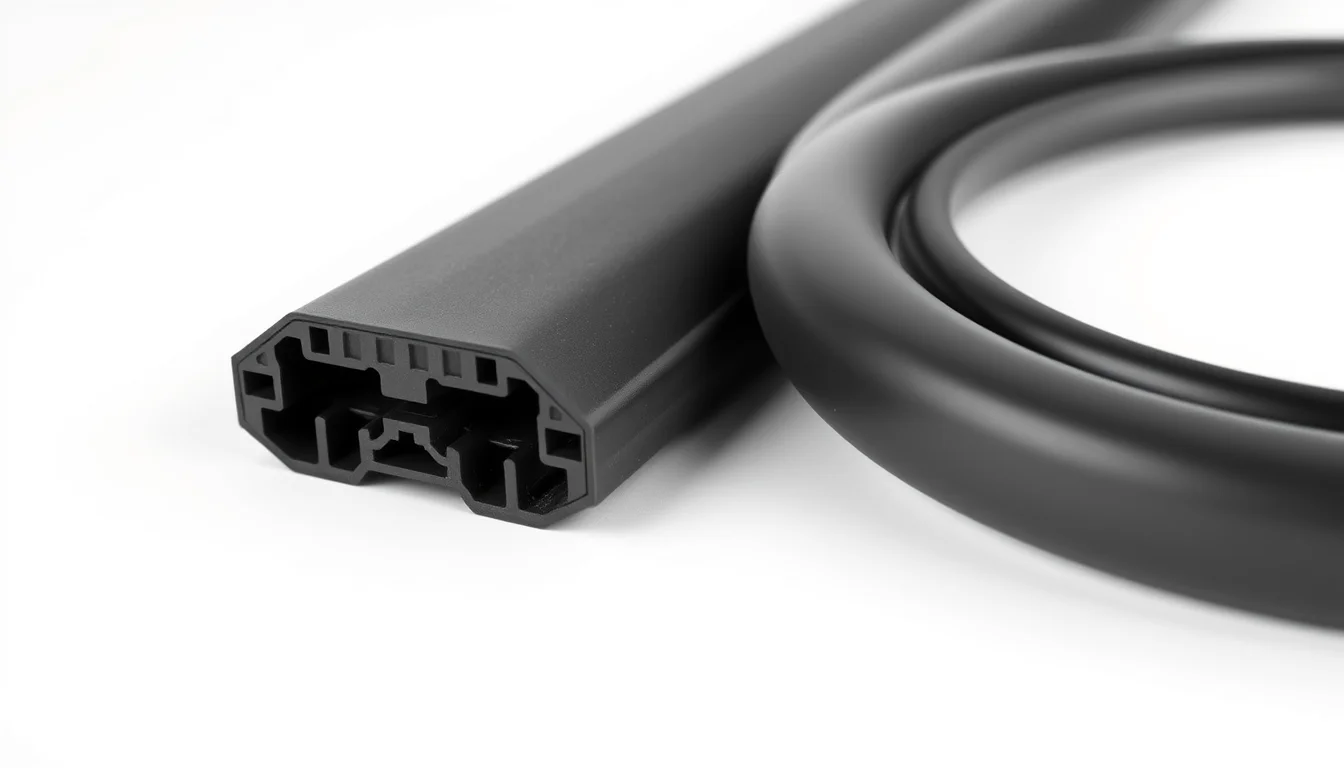
ASTM D573 rubber thermal aging test data determines whether an elastomer seal will survive 10 years or fail in 18 months — and for overseas B2B specifiers, the difference is measured in tensile strength retention, compression set percentage, and durometer shift after accelerated oven exposure. This page provides direct comparison tables for EPDM, silicone, NBR, and FKM compounds tested to ASTM D573, ASTM D395, and ISO 1817, so you can specify the correct polymer matrix for your project without guesswork. All figures below are drawn from production batches at our Changde, Hunan facility.
ASTM D573 Thermal Aging Performance by Elastomer
Tensile Strength and Elongation Retention After 70h / 168h / 1000h
| Material | Shore A | Tensile MPa (Original) | Tensile Retention @ 1000h / 125°C | Elongation Retention @ 1000h / 125°C | Max Continuous Temp |
|---|---|---|---|---|---|
| EPDM (peroxide-cured) | 70 ± 5 | 12.5 | 78% | 65% | 150°C |
| Silicone (VMQ) | 60 ± 5 | 8.2 | 85% | 72% | 200°C |
| NBR (medium ACN) | 70 ± 5 | 14.0 | 42% | 28% | 100°C |
| FKM (A-type) | 75 ± 5 | 11.8 | 92% | 80% | 220°C |
| Neoprene (CR) | 65 ± 5 | 10.5 | 55% | 40% | 120°C |
ASTM D573 specifies continuous oven aging at a defined temperature, with tensile strength and elongation measured per ASTM D412 before and after exposure. A compound that retains less than 50% tensile strength after 1000 hours at its rated temperature is generally disqualified for outdoor architectural or automotive sealing applications. Note that NBR, despite higher original tensile strength, degrades fastest under thermal aging — its acrylonitrile content accelerates crosslink scission above 100°C.
Compression Set After Thermal Aging — ASTM D395 Method B
| Material | 70h @ 100°C | 70h @ 125°C | 168h @ 150°C | 1000h @ 125°C |
|---|---|---|---|---|
| EPDM | 18% | 22% | 28% | 35% |
| Silicone | 20% | 25% | 32% | 40% |
| NBR | 22% | 35% | 48% | 62% |
| FKM | 15% | 18% | 22% | 28% |
Compression set above 40% typically indicates the seal will not recover sufficient height to maintain contact pressure in a door sealing strips or cabinet seals application. For dynamic seals, target compression set below 25% after 70h at service temperature.
Chemical Resistance Matrix — Oil, Acid, Alkali
Thermal aging resistance does not guarantee chemical resistance. The table below combines ASTM D573 aging data with ISO 1817 fluid immersion results (volume swell % after 168h at 23°C).
| Material | ASTM Oil No. 3 (100°C, 70h) | 10% H₂SO₄ | 10% NaOH | Ozone Resistance (50 pphm, 20% strain) |
|---|---|---|---|---|
| EPDM | 120% swell — not recommended | Excellent | Excellent | Excellent |
| Silicone | 80% swell — limited | Good | Good | Excellent |
| NBR | 8% swell — excellent | Fair | Good | Poor |
| FKM | 5% swell — excellent | Excellent | Good | Excellent |
| Neoprene | 25% swell — good | Good | Excellent | Good |
For sealing applications exposed to both thermal cycling and oil mist (e.g., engine bay gaskets), FKM or hydrogenated NBR (HNBR) is the only viable specification. EPDM remains the default for outdoor architectural profiles where ozone resistance and UV stability matter more than oil contact.
Thermal Aging vs. Service Life Prediction
Arrhenius Extrapolation from ASTM D573 Data
A 1000-hour ASTM D573 test at 125°C does not directly equal 10 years at 70°C. Using Arrhenius extrapolation with an activation energy of 80–100 kJ/mol for EPDM vulcanizates, the correlation is approximately:
| Accelerated Aging | Equivalent Service Life @ 70°C | Equivalent Service Life @ 50°C |
|---|---|---|
| 168h @ 125°C | 3.2 years | 9.5 years |
| 1000h @ 125°C | 19 years | 56 years |
| 1000h @ 150°C | 8 years | 24 years |
These figures assume compression set remains below 40% and tensile retention above 50%. For a 15-year building envelope specification, require minimum 1000h @ 125°C ASTM D573 data with tensile retention ≥70%.
Durometer Shift and Seal Function
Hardness change after thermal aging directly affects sealing force. A ±5 Shore A shift is generally acceptable; beyond ±10 Shore A, the seal either loses contact pressure (softening) or cracks at the sealing lip (hardening). Peroxide-cured EPDM typically shifts +3 to +5 Shore A after 1000h @ 125°C, while sulfur-cured EPDM can shift +8 to +12 Shore A due to continued crosslinking.
Material Selection for Specific Project Environments
Outdoor Architectural Profiles
Specify EPDM 70 Shore A, peroxide-cured, with UV stabilizer package. Target ASTM D573 1000h @ 125°C tensile retention ≥75%, compression set ≤35%. Ozone resistance must pass 50 pphm at 20% strain with no cracking. For WPC profiles, co-extruded EPDM sealing lips are standard.
High-Temperature Industrial Cabinets
Silicone VMQ 60 Shore A offers 200°C continuous service with 85% tensile retention after 1000h @ 125°C. However, silicone has poor resistance to steam and some oils. For silicone series used in electrical enclosures, verify UL 94 V-0 flame retardancy and ASTM D573 data at 150°C.
Oil-Contact Machinery Seals
NBR 70 Shore A is cost-effective for oil contact below 100°C, but thermal aging data shows rapid degradation above 100°C. FKM is the specified choice for continuous service above 120°C with oil contact. Compression set for FKM after 1000h @ 125°C is 28%, versus 62% for NBR.
In our Hunan factory experience, a European OEM specified EPDM door gaskets for a cold-storage facility at -35°C. Standard EPDM passed ASTM D573 thermal aging but failed low-temperature compression set testing. We reformulated with a low-temperature plasticizer and peroxide cure system, achieving -45°C Tg while maintaining 1000h @ 125°C tensile retention above 72%. The lesson: thermal aging data alone does not predict cold-climate performance — always request both ASTM D573 and low-temperature brittleness data.
Extrusion Tolerance and Vulcanization Control
ASTM D573 aging performance depends on consistent vulcanization. Under-cured profiles show 20–30% lower tensile retention; over-cured profiles become brittle and fail elongation requirements. Our extrusion lines hold ±0.1 mm tolerance on critical sealing dimensions and ±0.05 mm on lip thickness, with in-line laser measurement documented per batch. Vulcanization temperature is controlled to ±2°C across the curing tunnel, and each production lot is tested for tensile strength, elongation, and compression set before shipment.
| Parameter | Standard Tolerance | Premium Tolerance |
|---|---|---|
| Cross-section height | ±0.15 mm | ±0.08 mm |
| Sealing lip thickness | ±0.10 mm | ±0.05 mm |
| Hardness | ±5 Shore A | ±3 Shore A |
| Cut length | ±1.0 mm | ±0.5 mm |
Frequently Asked Questions
What is your MOQ for custom rubber sealing strips?
MOQ is 500 meters for standard EPDM and silicone profiles, and 1,000 meters for custom-compounded FKM or HNBR formulations. For OEM/ODM projects with existing tooling, MOQ can be reduced to 300 meters per color or hardness variant. Mixed-container orders combining multiple profiles are accepted.
What is your lead time for ASTM D573-tested production batches?
Standard lead time is 15–20 working days after drawing approval and sample confirmation. If ASTM D573 thermal aging test reports are required per batch, add 5–7 working days for independent laboratory testing. Rush orders for existing tooling can ship in 10 working days with prior arrangement.
What extrusion tolerance can you hold?
Standard production tolerance is ±0.15 mm on cross-section height and ±0.10 mm on sealing lip thickness. Premium tolerance of ±0.08 mm and ±0.05 mm respectively is available for automotive and medical device sealing applications. Tolerance capability is documented per ISO 3302-1 Class E2 or tighter.
How are sealing strips packed for export?
Profiles are coiled in 50m or 100m rolls, wrapped in PE film, then packed in double-wall corrugated cartons or wooden crates for sea freight. Cut-length pieces are packed in rigid trays to prevent deformation. All packaging includes desiccant and batch traceability labels with ASTM D573 test report reference numbers.
Can I get free samples before placing a bulk order?
Yes. We provide 2–5 meter free samples of standard profiles, and 1–2 meter samples of custom-compounded materials. Sample lead time is 3–5 working days for stock profiles and 10–12 working days for custom formulations. Buyer covers courier cost, which is credited against the first production order.
Send your CAD drawing for a 24-hour quote.
Need a Custom Quote?
Send your CAD drawing or specs (material, hardness, profile, temperature range, MOQ) — our engineering team will respond within 24 hours.