
Custom Rubber Extrusion Service | OEM Factory
By Zhouxin Sealing Engineering Team · · 139 views
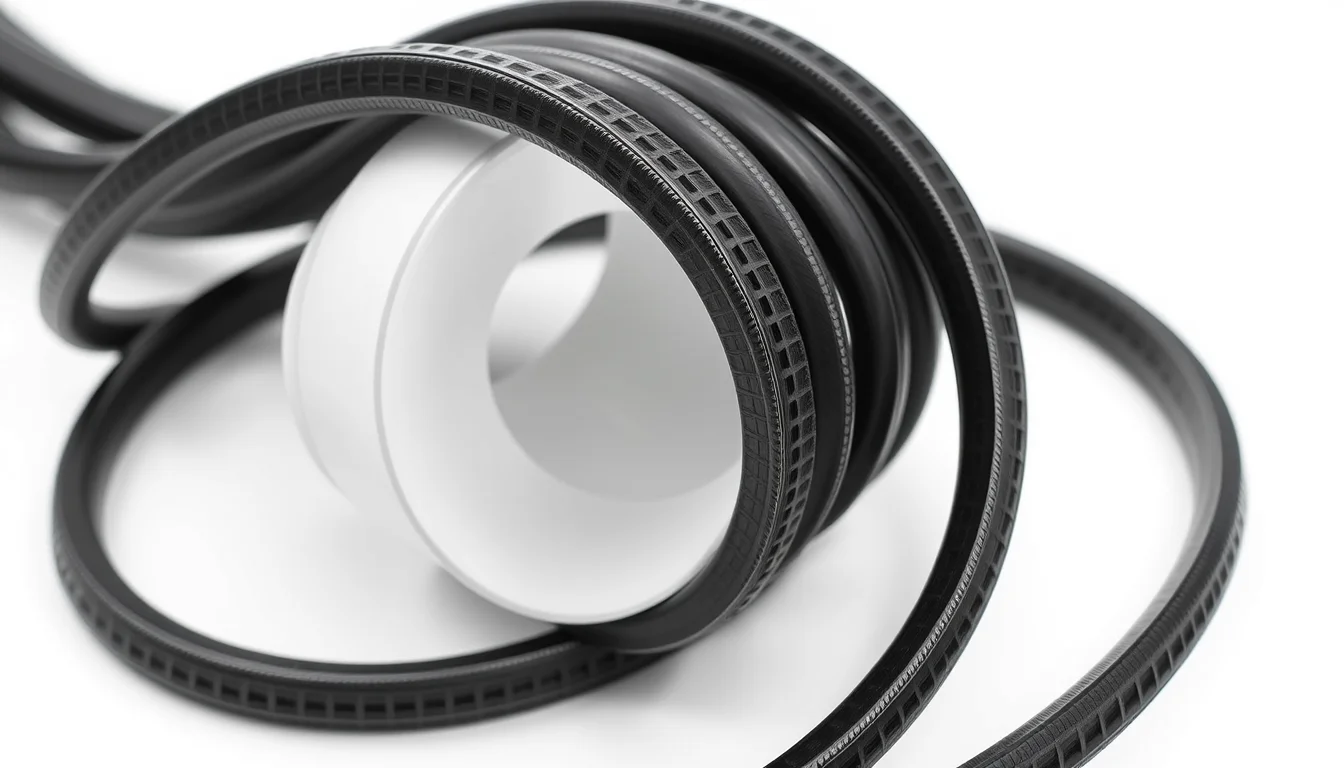
If you are sourcing custom rubber profiles for a B2B project, the custom rubber extrusion service you choose determines your product's sealing performance, tolerance consistency, and long-term durability. This guide walks you through the real factory workflow—from drawing review to export packing—so you can compare capabilities, avoid common procurement pitfalls, and shorten your lead time.
What Defines a Reliable Custom Rubber Extrusion Service
A competent custom rubber extrusion service is not just about pushing a polymer through a die. It involves material compounding, extrusion line setup, vulcanization (hot air, salt bath, or microwave), and post-cure operations. For overseas buyers, the critical factors are:
- Material traceability: The compound must meet your specified durometer (Shore A), tensile strength, and thermal aging requirements.
- Tolerance control: Extrusion tolerances are typically ±0.5mm for cross-sections under 10mm, but can be tightened to ±0.15mm with CNC-machined tooling.
- Surface finish: Whether you need a smooth matte, a textured surface, or a flocked coating for window channels, the factory must have the right downstream equipment.
How to Evaluate Factory Capabilities (Not Just Price)
When comparing quotes, ask for:
- In-house tooling shop – reduces tooling cost and lead time.
- Compound lab – ensures consistent Shore A hardness and compression set.
- Testing equipment – for tensile strength, elongation, and ozone resistance.
A factory that outsources tooling or mixing may save initial cost but often struggles with repeatability.
The Real Custom Extrusion Process: From CAD to Container
Here is the step-by-step process we follow in our Hunan factory, which applies to most custom rubber extrusion projects:
1. Drawing Review and Feasibility
You send a 2D drawing (PDF or DWG) or a 3D STEP file. Our engineers check wall thickness (minimum 0.8mm for EPDM), hollow/solid ratios, and whether the profile can be extruded in one piece. If your design has undercuts or sharp corners, we suggest modifications to avoid die breakage.
In our Hunan factory experience, we see about 1 in 5 drawings missing a critical dimension like the seal lip angle or the compression gap. This causes a 3–5 day delay in the sample phase. A simple circled note on the functional surface can save an entire revision cycle.
2. Material Selection and Compounding
We match your application environment to a polymer matrix—EPDM for outdoor UV and ozone, silicone for extreme temperature, NBR for oil resistance. We can adjust durometer from 40 to 80 Shore A, and tensile strength up to 12 MPa for EPDM. If your spec calls for ASTM D573 thermal aging (70 hours at 100°C) or ASTM D395 compression set, we run those tests on pre-production samples.
3. Tooling (Die) Fabrication
Your profile's cross-section is machined into a die. For simple solid profiles, tooling cost is around $200–$500. For hollow or complex profiles, expect $500–$1200. Tooling lead time is 5–10 days. We keep the die for your future orders at no extra charge.
4. Prototype Sampling and Tolerance Verification
We produce 1–2 meters of sample for your approval. Tolerances are measured with a profile projector. For critical sealing surfaces, we can hold ±0.2mm. If you need a full functional test, we can provide samples within 7–10 days.
5. Production and Post-Cure
After sample approval, production takes 2–3 weeks depending on volume. For silicone or EPDM requiring low compression set, we perform post-curing in an oven to stabilize the polymer matrix.
6. Packing and Export
We pack in coils (on cardboard spools), straight lengths (wooden crates), or cut-to-length pieces in cartons. Each coil is protected with stretch film and corner boards. For sea freight, we use fumigation-free plywood boxes. We can also apply labels with your part number and batch code.
Material Selection: Comparing Common Elastomers for Extrusion
When you send us your drawing, also specify the operating environment. This table helps you narrow down the material choice:
| Material | Shore A Hardness | Tensile Strength (MPa) | Temperature Range (°C) | Ozone Resistance | Compression Set (ASTM D395) | Cost Index |
|---|---|---|---|---|---|---|
| EPDM | 40–90 | 5–12 | -40 to 150 | Excellent | Low | $ |
| Silicone | 30–80 | 4–10 | -60 to 230 | Excellent | Low | $$$ |
| NBR | 50–90 | 8–15 | -30 to 120 | Fair | Moderate | $$ |
| CR (Neoprene) | 40–80 | 8–12 | -30 to 120 | Good | Moderate | $$ |
| SBR | 50–90 | 5–10 | -40 to 100 | Poor | Moderate | $ |
For flame-retardant requirements, silicone with UL 94 V-0 rating is available. For fuel or oil exposure, NBR is preferred. If your seal will be exposed to UV and weathering, EPDM is the industry standard.
Sending Proper CAD Drawings to Reduce Back-and-Forth
A complete drawing package can cut your sample lead time by a week. Here is what we need:
- Cross-section dimensions – all external and internal lengths, radii, and angles.
- Tolerance callouts – critical sealing surfaces should have ±0.2mm; non-critical can be ±0.5mm.
- Material and hardness – e.g., EPDM, Shore A 60.
- Surface finish – smooth, matte, or flocked.
- Length requirements – cut-to-length, continuous coil, or spliced.
Common Errors in Drawings
- Missing wall thickness at bends – leads to die weakness.
- No indication of the direction of extrusion – affects grain and flexibility.
- Using 3D model without a 2D cross-section – we have to extract it, but a 2D PDF is faster.
Frequently Asked Questions
What is the MOQ for custom rubber extrusions?
Our MOQ is 500 meters per profile for standard materials like EPDM and NBR. For silicone, the MOQ is 300 meters due to higher raw material cost. If you are prototyping, we can produce a 50-meter trial run at a small upcharge.
What is the tooling cost and lead time?
Tooling cost ranges from $200 to $1200 depending on complexity. Simple solid profiles are on the lower end, hollow profiles with thin walls are higher. Tooling lead time is 5–10 days, and we waive the tooling fee for production orders above 2000 meters.
What extrusion tolerance can you hold?
Standard tolerance is ±0.5mm for cross-sections under 10mm. For critical sealing surfaces, we can hold ±0.15mm with CNC-machined dies and careful process control. Our QC uses a profile projector to verify each batch.
How are the products packed for export?
We offer three packing options: coils on spools (for continuous length), straight lengths in wooden crates, and cut-to-length pieces in cartons. All materials are protected from UV and moisture, and we use fumigation-free wood for sea freight.
Can I get samples before mass production?
Yes, we provide pre-production samples within 7–10 days after tooling is ready. Samples are free for the first 2 meters, but shipping cost is on your side. We also send a sample with the production batch for your final approval.
How This Applies to Your Specific Application
Whether you are sourcing door sealing strips for automotive or architectural use, silicone series for high-temperature environments, or cabinet seals for electronics enclosures, the same engineering discipline applies. For decorative profiles, we also offer WPC profiles with wood-like aesthetics.
Send Your CAD Drawing for a 24-Hour Quote
Get a competitive quote with technical feedback on your design. Send your 2D drawing or 3D file to our engineering team, and we'll respond within one business day with material recommendations, tooling cost, and estimated lead time.
| Project Info | What We Need |
|---|---|
| Drawing format | PDF, DWG, STEP, or IGES |
| Material preference | EPDM, silicone, NBR, CR, or we recommend |
| Hardness range | Shore A 40–90 |
| Quantity | Length in meters or pieces |
| Application | Brief description for environment |
Contact us today to start your custom rubber extrusion project.
Need a Custom Quote?
Send your CAD drawing or specs (material, hardness, profile, temperature range, MOQ) — our engineering team will respond within 24 hours.