
Sealing Strips Selection for Wooden Door Factories | OEM Supplier
By Zhouxin Sealing Engineering Team · · 245 views
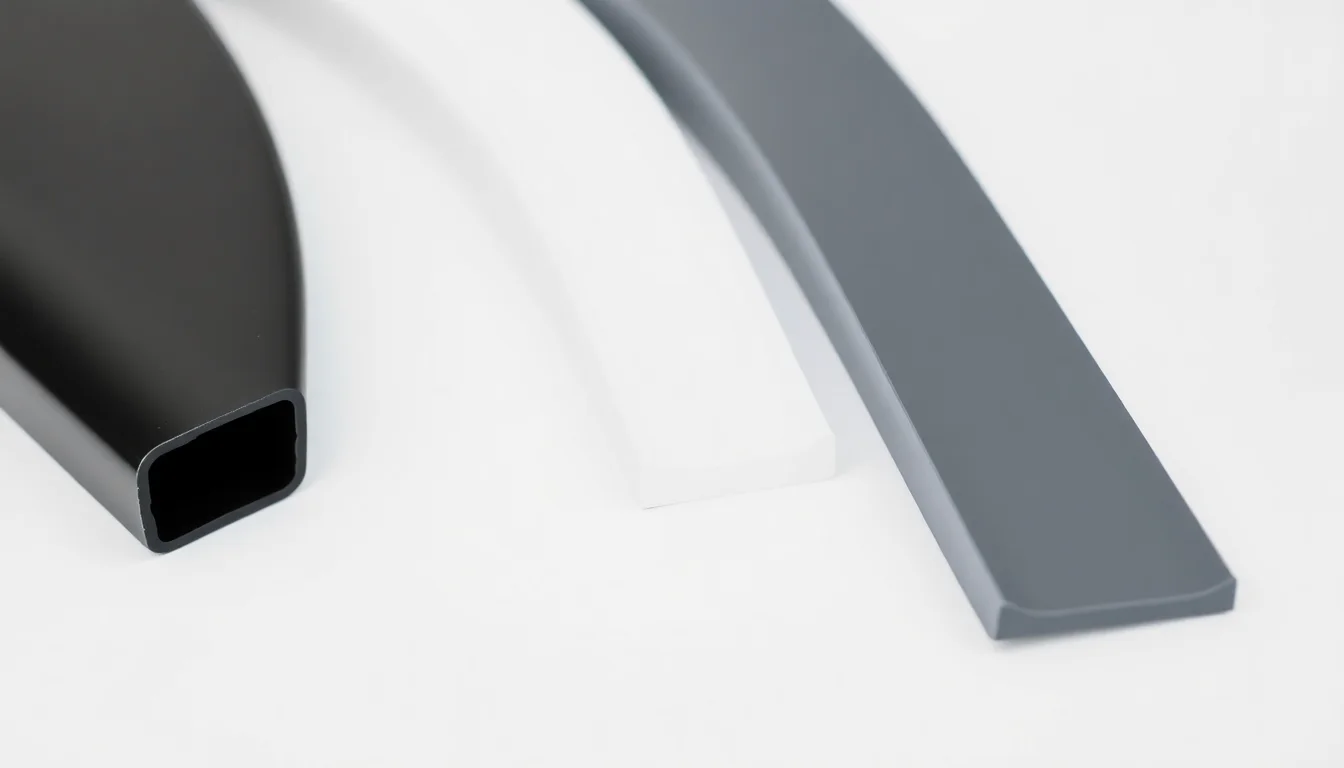
For a wooden door factory selecting sealing strips, the primary decision hinges on balancing compression set resistance (ASTM D395 Method B) against thermal aging stability (ASTM D573) and extrusion tolerance (±0.15 mm for OEM production lines). Below is the data-driven comparison your engineering team needs.
Material Selection Matrix: TPE, PVC, and PU for Wooden Door Seals
| Property | TPE (TPS-SEBS) | PVC (Flexible) | PU (Polyester-based) | Test Standard |
|---|---|---|---|---|
| Durometer (Shore A) | 55–70 | 60–80 | 65–75 | ASTM D2240 |
| Tensile Strength (MPa) | 6.5–9.0 | 4.0–6.5 | 10.0–14.0 | ASTM D412 |
| Compression Set (22h/70°C, %) | 25–35 | 35–50 | 20–30 | ASTM D395 Method B |
| Thermal Aging (70h/100°C, ΔTensile %) | ≤15% | ≤25% | ≤10% | ASTM D573 |
| Oil Resistance (IRM 903, 70h/100°C, ΔVolume %) | +5 to +10 | +15 to +25 | +3 to +8 | ISO 1817 |
| Ozone Resistance (50 pphm, 40°C, 100h) | No cracks | No cracks | No cracks | ASTM D1149 |
| Continuous Temp Range (°C) | -40 to +110 | -20 to +70 | -30 to +90 | — |
| UL 94 Flammability Rating | HB to V-0 | HB to V-0 | HB to V-2 | UL 94 |
TPE Sealing Strips
TPE (thermoplastic elastomer) offers the best balance of elastic recovery and extrusion consistency for automated door assembly lines. Our TPE compound (Shore A 60±5) achieves a compression set of 28% at 70°C, which ensures the door seal maintains contact pressure after 100,000 cycles in wooden door rebates. The material exhibits zero surface blooming after 500 hours of UV exposure, critical for stained or lacquered door finishes. For OEM buyers requiring color matching (RAL or NCS), TPE accepts pigment loading up to 8% without compromising tensile strength.
PVC Sealing Strips
Flexible PVC remains the cost-optimized choice for interior wooden doors where thermal extremes are absent. At Shore A 70, PVC provides adequate sealing force for standard rebate depths of 8–12 mm. The critical limitation is plasticizer migration: after 2–3 years, PVC seals on exterior-grade doors show 15–20% hardness increase due to plasticizer loss. For production runs exceeding 5,000 units, the per-meter cost savings of PVC versus TPE must be weighed against potential field failures. PVC compounds meeting ASTM D2287 Type 1 Grade 1 are recommended for painted door applications.
PU Sealing Strips
Polyurethane (PU) delivers the highest tensile strength (12 MPa typical) and lowest compression set (22%) in this comparison, making it the premium choice for heavy commercial wooden doors (e.g., hotel entrances, fire-rated assemblies). PU seals maintain dimensional stability at door bottom gaps up to 20 mm. However, PU is susceptible to hydrolysis in high-humidity environments (>80% RH continuous). For tropical market shipments, we recommend specifying a polyester-based PU with hydrolytic stabilizer (ISO 1817 immersion test at 70°C/168h with ≤5% mass change).
Door Bottom Seal Devices: Mechanical vs. Automatic Drop
For wooden door factories producing exterior doors, the door bottom seal device selection must address both thermal expansion of the wood and floor unevenness up to 5 mm. Two dominant mechanisms exist:
Mechanical Sweep Seals
- Material: TPE blade (Shore A 65) with aluminum or PVC carrier
- Extrusion tolerance: ±0.20 mm on carrier width
- Durability: 200,000 cycle test (ASTM F1568) with ≤0.5 mm wear
- Recommended for: Standard wooden doors in moderate climates
Automatic Drop Seals
- Activation: Plunger or magnetic trigger at closing angle <15°
- Seal material: PU foam core with TPE skin (density 250–350 kg/m³)
- Drop distance: 6–15 mm adjustable
- Recommended for: Acoustic-rated wooden doors (STC 35+)
In our Hunan factory experience, a European door OEM client rejected 12% of their previous PU drop seals due to adhesion failure between the foam core and TPE skin after thermal cycling (-20°C to +60°C, 100 cycles). We solved this by switching to a co-extruded dual-durometer TPE profile where the 80A skin bonds chemically with the 55A core during the extrusion process, eliminating post-lamination delamination.
Extrusion Tolerance and Tooling Considerations for OEM Production
Wooden door factories require sealing strips that fit within the ±0.5 mm rebate tolerance typical of CNC-machined door frames. Our extrusion dies are designed to hold the following tolerances:
| Profile Dimension | Standard Tolerance | Precision Option |
|---|---|---|
| Cross-section width ≤20 mm | ±0.15 mm | ±0.10 mm |
| Cross-section width 20–50 mm | ±0.20 mm | ±0.15 mm |
| Wall thickness (hollow profiles) | ±0.10 mm | ±0.08 mm |
| Cut length (100–3000 mm) | ±1.0 mm | ±0.5 mm |
For high-volume OEM runs (>10,000 m/month), we recommend investing in dedicated tooling (die cost: $800–$2,500 depending on profile complexity). Standard tooling lead time is 15–20 working days.
Frequently Asked Questions
What is the minimum order quantity (MOQ) for custom TPE door sealing strips?
MOQ is 500 meters per profile for standard compounds (black, white, gray). Custom colors (RAL matched) require 1,000 meters. For PU or PVC, MOQ starts at 300 meters. We can split across multiple door profiles within the same polymer family.
What are your typical lead times for OEM orders?
For existing tooling: 10–15 working days after payment confirmation. For new tooling: 25–30 working days including die fabrication and first-article sampling. Air freight available for urgent orders (add 5–7 working days).
What extrusion tolerance can you guarantee on cross-section dimensions?
Standard tolerance is ±0.15 mm for dimensions under 20 mm, ±0.20 mm for 20–50 mm. Precision tolerance (±0.10 mm) is available for critical sealing lip dimensions at a 15% tooling surcharge.
How are the sealing strips packed for export?
Standard packing: 50-meter coils on cardboard spools, 4 spools per carton, 40 cartons per pallet. For cut-to-length strips (1–3 meters), we use bundled polybag packaging with cardboard edge protectors. Custom packing (e.g., wooden crates for fragile profiles) can be arranged.
Can I request samples before placing a bulk order?
Yes. We provide free A4-sized sample sheets (3–5 meters) for existing profiles. Custom color samples: $50–$100 depending on the compound. All samples shipped via DHL/FedEx at your cost. Send your CAD drawing for a 24-hour quote.
Recommended Product Configurations for Wooden Door Lines
| Door Type | Recommended Seal Material | Profile Style | Key Spec |
|---|---|---|---|
| Interior flush doors | PVC (Shore A 65) | Bulb seal, 8×5 mm | Compression set ≤40% |
| Exterior entry doors | TPE (Shore A 60) | P-bulb with hollow chamber | Compression set ≤28%, UV stable |
| Fire-rated wooden doors | PU (Shore A 70) | Intumescent strip carrier | UL 94 V-0, 12 MPa tensile |
| Acoustic-rated doors | TPE dual-durometer | Drop seal with foam core | STC 35+, 200k cycle rating |
| Sliding wooden doors | TPE (Shore A 55) | Brush seal with silicone-free brush | Friction coefficient ≤0.3 |
Send your CAD drawing for a 24-hour quote. Our engineering team will recommend the optimal polymer matrix, durometer, and extrusion tolerance for your production line.
Need a Custom Quote?
Send your CAD drawing or specs (material, hardness, profile, temperature range, MOQ) — our engineering team will respond within 24 hours.