
High Temperature Resistant Rubber Seal | OEM Factory Guide
By Zhouxin Sealing Engineering Team · · 130 views
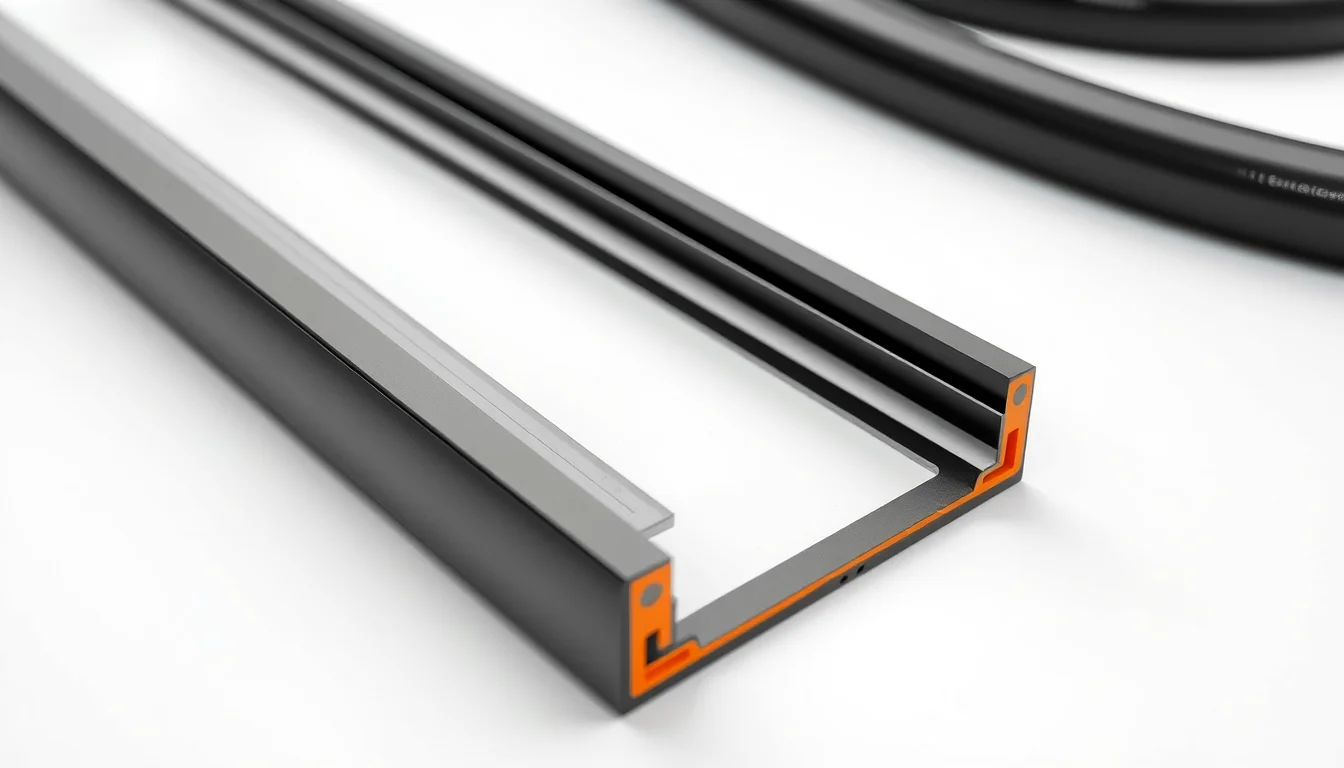
If you are sourcing a high temperature resistant rubber seal for a continuous operating environment above 120°C, your polymer choice and the supplier's vulcanization control will determine whether your assembly fails in 500 hours or lasts 10,000. As a sealing engineer who has reviewed over 1,200 overseas RFQs, I can tell you that the fastest way to cut through the noise is to specify durometer, compression set, and thermal aging data (ASTM D573) upfront. Here is exactly how to structure that procurement conversation with a custom extrusion factory.
Defining "High Temperature" for Your Specific Application
For B2B specifiers, "high temperature" is not an absolute number—it is a delta relative to your polymer's glass transition and degradation point. In our shop, we classify high-temperature resistance into three operational bands, and this determines whether your part should be EPDM, silicone, or a specialty elastomer.
| Material | Continuous Temp Range | Peak Intermittent Temp | Shore A Hardness | Tensile Strength (MPa) | Compression Set (22h/150°C, %) | Relative Cost Index |
|---|---|---|---|---|---|---|
| EPDM (Peroxide-cured) | -45°C to 150°C | 170°C | 50-80 | 8-15 | 15-25 | 1.0x |
| Silicone (VMQ) | -55°C to 230°C | 280°C | 30-70 | 5-9 | 10-20 | 1.6x |
| FKM (Fluorocarbon) | -20°C to 250°C | 300°C | 60-90 | 10-18 | 10-20 | 4.5x |
Why Thermal Aging (ASTM D573) Matters More Than Peak Rating
Many overseas buyers see a 230°C rating on a silicone datasheet and assume it can hold a seal indefinitely at that temperature. In our factory, we test every high temperature resistant rubber seal batch under ASTM D573—air oven aging for 70 hours at the rated temperature—and we check for hardness change (ΔShore A) and tensile retention. If your application is a heat-staking press or an engine bay, you need a polymer matrix that retains 85% elongation after aging, not just a material that melts at a high point.
The Custom Extrusion Process: From CAD to Vulcanized Part
When you send us a drawing for a high temperature resistant rubber seal, we run it through a five-stage process. Knowing this sequence will help you set realistic expectations for tooling cost and sample lead time.
Stage 1: Profile Design and Material Selection
We first analyze your cross-section for wall thickness balance. A common issue we see in imported CAD files is a profile with a 1.0mm thin wall adjacent to a 6.0mm thick bulb. In an extrusion die, that thick section cures slower and can create a hard spot or porosity. We recommend designing for a wall thickness variation of no more than 4:1. If your geometry demands otherwise, we will suggest a dual-durometer co-extrusion.
Stage 2: Die Tooling and Prototype
For a standard high temperature resistant rubber seal profile, the die tooling cost ranges from $350 to $900 depending on complexity (number of lips, hollow chambers, or metal insert tracks). We manufacture the die in-house in Changde, which keeps the lead time to 5-7 working days. A prototype sample run (3 meters) is typically ready 3-5 days after die approval.
Stage 3: Extrusion and Vulcanization
This is where thermal resistance is truly locked in. The uncured elastomer is forced through the die, then passed through a hot-air vulcanization tunnel or salt bath. For EPDM with a 150°C continuous rating, we use peroxide curing rather than sulfur curing—this gives a more stable carbon-carbon crosslink that resists reversion at high temperatures. Sulfur-cured EPDM will soften and take a permanent set above 140°C; peroxide-cured will hold its durometer.
Stage 4: Post-Curing (For Silicone)
If you selected a silicone high temperature resistant rubber seal for a 200°C+ oven door, we perform a secondary oven post-cure at 200°C for 4 hours. This drives out volatile oligomers and stabilizes the polymer matrix. Without this step, the seal may off-gas and shrink by up to 2% in your first heat cycle.
Stage 5: Quality Inspection
We check extrusion tolerance to ±0.40mm on critical sealing lips and ±0.80mm on overall profile width. For high-temperature applications, we also verify hardness (Shore A) and perform a 22-hour compression set test per ASTM D395 Method B. If you require UL 94 flame retardancy (V-0 rating) for an electronics cabinet, we can compound the silicone or EPDM with flame-retardant fillers—but expect a 10-15% cost premium and a slight reduction in elasticity.
How to Send CAD Drawings That Reduce Back-and-Forth
Miscommunication on drawings is the #1 cause of delayed sample shipments. Here is our internal checklist for what we need from you on the first email.
- Cross-section in DXF or DWG format (1:1 scale). If you only have a PDF, ensure the dimension lines are not overlapping the profile geometry.
- Overall length of the finished piece. Are we cutting straight lengths, or do you need vulcanized (endless) joints? A molded corner splice adds 3-4 days to lead time.
- Tolerance callouts. Do not specify ±0.10mm on a 10mm wide sponge rubber profile—that is not achievable in continuous extrusion. Standard is ±0.40mm for dense rubber. We can hold ±0.20mm on bulb diameter if you pay for a precision die and secondary grinding.
- Hardness range. Give us a target Shore A with a ±5 tolerance, not a single number.
- Environmental exposure. Note if the seal contacts oil (ISO 1817 fluid immersion testing applies), ozone, or UV. This changes the polymer from EPDM to FKM or silicone.
In our Hunan factory experience, buyers who send a 2D drawing with a single overall dimension and no tolerance block receive a preliminary quote in 6 hours, but they often lose 10 days in revision cycles because we must ask clarifying questions about the sealing lip interference fit. The buyers who attach a 3D STEP file plus a dimensional callout table receive a confirmed die quote and sample date in one round.
Sourcing Comparison: Custom Factory vs. Stock Part Distributor
When you have an active PO for 5,000 meters of a high temperature resistant rubber seal, the difference between a custom extrusion house and a stock distributor is significant.
| Factor | Custom Factory (Zhouxin) | Stock Distributor |
|---|---|---|
| MOQ | 500 meters | 1 full spool (often 100m) |
| Tooling Cost | $350-$900 one-time | None (but limited profiles) |
| Lead Time (Samples) | 7-10 days | Immediate |
| Lead Time (Production) | 15-20 days | 2-3 days |
| Material Grade | Tailored to your temp/chemical needs | Off-the-shelf generic EPDM |
| Tolerance | ±0.40mm custom | ±0.80mm standard |
| OEM Branding | Yes (laser marking, color) | No |
If your application is a standard T-slot glazing gasket for a window, buy stock. If you are sealing a diesel engine cover that sees 160°C radiant heat and needs a 10-year service life, a custom high temperature resistant rubber seal with a documented cure curve is the only defensible choice.
Cost Drivers and MOQ Reality for High-Temperature Compounds
Let us talk money. For a silicone high temperature resistant rubber seal, the raw material compound costs roughly $6-$9 per kilogram. EPDM peroxide-cured is about $3-$5 per kilogram. FKM jumps to $30-$50 per kilogram. Your total part price is driven by cross-section weight (grams per meter) plus die amortization.
- MOQ: 500 meters for standard dense profiles. For sponge (cellular) rubber, MOQ is 1,000 meters due to the foaming agent setup.
- Tooling: $350 for a simple solid rectangle, up to $900 for a complex bulb-and-lip profile with a metal insert channel.
- Sample Policy: We charge $50-$100 for samples plus express shipping, refunded against your first production order over $2,000. We do not run free samples because we have found that serious buyers with active POs do not mind a nominal fee, and it filters out design-stage tire-kickers.
Frequently Asked Questions
What is your MOQ for a custom high temperature resistant rubber seal?
Our standard MOQ is 500 meters for dense rubber profiles (EPDM, silicone, FKM) and 1,000 meters for sponge rubber. If you are at the prototyping stage, we can produce a 50-meter pilot run at a 20% price premium to validate your assembly line fit before committing to full production.
What is the sample lead time and tooling cost?
Once we approve your CAD drawing and material spec, die fabrication takes 5-7 working days. Prototype samples are then extruded and shipped within 3-5 days. Total sample lead time is 8-12 working days via DHL or FedEx. Tooling costs range from $350 to $900, fully credited back to you after your cumulative production orders exceed $3,000.
What extrusion tolerance can you hold on the seal profile?
For dense rubber, we hold ±0.40mm on critical sealing dimensions (lip height, bulb outer diameter) and ±0.80mm on overall profile width. If you require tighter precision, we can use a post-extrusion calibration die to achieve ±0.15mm, but this adds a 5% cost premium. We cannot guarantee tighter than ±0.10mm on continuous lengths.
How do you pack high temperature resistant rubber seals for export?
We pack straight lengths in reinforced cardboard cartons with a maximum gross weight of 25kg. Each carton is lined with anti-rust kraft paper to prevent surface marking. For coiled profiles, we use 1.2-meter diameter coils on a steel or plastic core, then wrap with stretch film and secure to a pallet. We mark every carton with your PO number, part number, and heat/lot traceability code.
Can you provide a material certificate and test report with the shipment?
Yes. Each production batch ships with a mill certificate stating durometer (Shore A), tensile strength (MPa), elongation at break, and specific gravity. We also provide thermal aging data per ASTM D573 and compression set per ASTM D395 if your drawing specifies those requirements. Third-party testing (SGS or TUV) is available at cost, typically $150-$300 per batch.
Matching the Right Seal to Your Door and Cabinet Applications
For general industrial doors that see intermittent heat up to 120°C, our door sealing strips in peroxide-cured EPDM offer the best cost-to-performance ratio. If your oven door or furnace enclosure pushes past 180°C, switch to our silicone series which handles continuous dry heat exceptionally well. For electrical cabinets where flame retardancy (UL 94 V-0) and heat resistance are both non-negotiable, a silicone sponge profile from our cabinet seals line is the industry standard. And if you are working on a building facade joint that must withstand both thermal cycling and UV, consider our WPC profiles for the decorative cover, paired with a silicone internal seal.
| Seal Type | Max Temp | Key Standard | Best For |
|---|---|---|---|
| EPDM dense | 150°C continuous | ASTM D573 | Industrial door seals, watertight enclosures |
| Silicone sponge | 230°C continuous | UL 94 V-0 | Oven gaskets, lighting fixtures |
| FKM dense | 250°C continuous | ISO 1817 (oil) | Engine covers, chemical processing |
Send your CAD drawing for a 24-hour quote.
Need a Custom Quote?
Send your CAD drawing or specs (material, hardness, profile, temperature range, MOQ) — our engineering team will respond within 24 hours.