
Clean Room Door Bottom Seal | OEM Supplier & Manufacturer
By Zhouxin Sealing Engineering Team · · 259 views
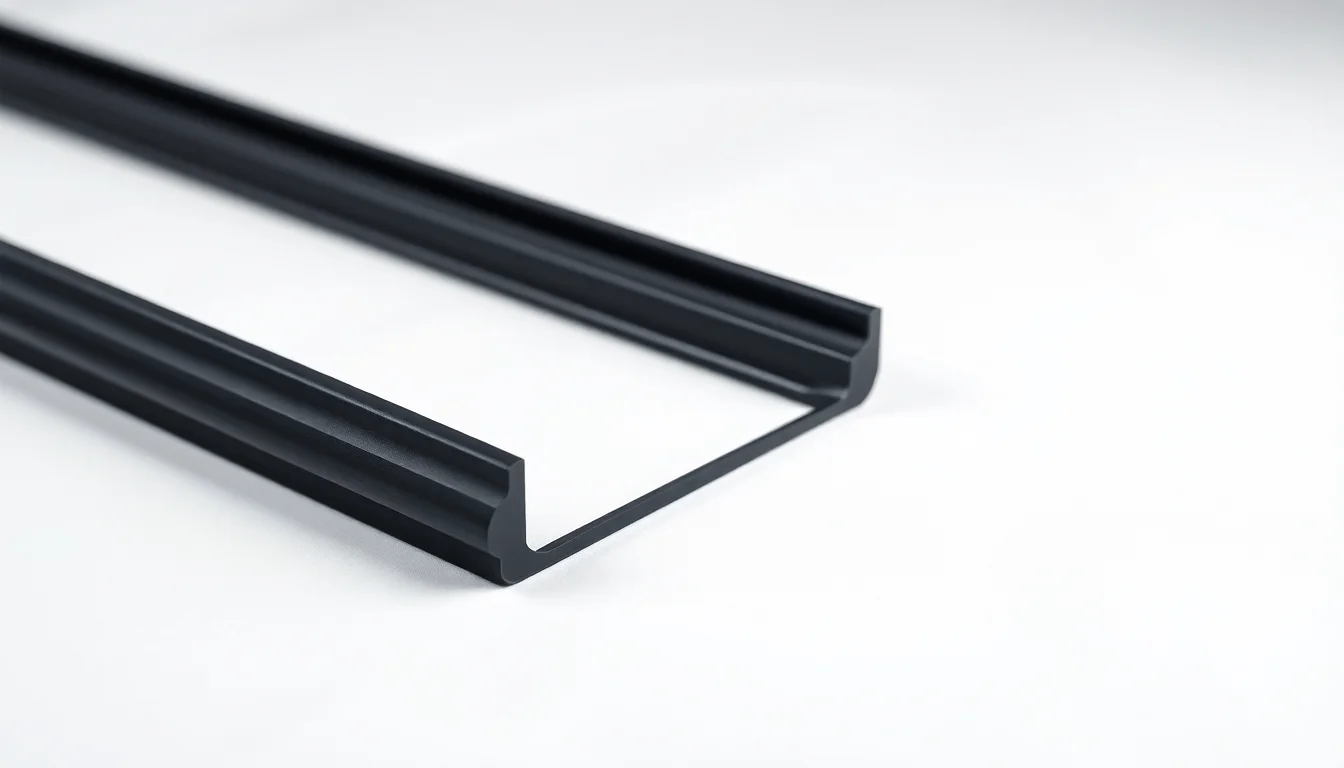
A clean room door bottom seal must maintain a positive pressure barrier under repeated high-pressure friction, sub-zero cycling, and long-term UV exposure — not just block dust. For specifiers managing pharmaceutical or semiconductor facilities, the elastomer selection directly determines particle ingress rates and door actuation longevity.
Material Duel: EPDM vs. PVC for Dynamic Clean Room Seals
Clean room door seals operate at the intersection of compression set resistance and low-friction wear. EPDM and PVC remain the two dominant polymer matrix choices, but their performance diverges sharply under clean room conditions.
EPDM: The Workhorse for Thermal and Ozone Resistance
EPDM (ethylene propylene diene monomer) exhibits a Shore A hardness range of 60±5 for flexible lips, with tensile strength reaching 8-10 MPa. Its saturated backbone provides exceptional ozone resistance — no cracking after 1000 hours at 50 pphm per ASTM D573. Temperature range spans -40°C to +150°C, making it suitable for cold storage clean rooms and autoclave vestibules.
Key spec for specifiers: Compression set per ASTM D395 Method B at 70°C/22h is ≤25%, ensuring the seal recovers after door closure cycles. Extrusion tolerance is ±0.15 mm on critical lip dimensions.
PVC: Cost-Effective but Limited in Dynamic Duty
PVC (polyvinyl chloride) seals typically run Shore A 65-70, with tensile strength around 5-7 MPa. While cheaper per meter, PVC suffers from plasticizer migration under repeated friction, leading to surface hardening and cracking after 6-12 months. Temperature range is narrower: -10°C to +60°C. Ozone resistance is poor — visible crazing appears after 200 hours in accelerated aging tests.
| Property | EPDM (Grade 70A) | PVC (Flexible Grade) |
|---|---|---|
| Shore A Hardness | 60 ± 5 | 65 ± 5 |
| Tensile Strength (MPa) | 8 – 10 | 5 – 7 |
| Temperature Range (°C) | -40 to +150 | -10 to +60 |
| Compression Set (%) | ≤ 25 (70°C/22h) | ≤ 45 (70°C/22h) |
| Ozone Resistance (1000h) | No cracks | Crazing by 200h |
| Extrusion Tolerance (mm) | ± 0.15 | ± 0.30 |
| Relative Cost per Meter | $$ | $ |
Real-World Deployment: Cold Storage Clean Room Door
A recent project for a Korean pharmaceutical client involved a -20°C clean room corridor with 20,000 door cycles per month. The original PVC bottom seal failed within 8 months — plasticizer exudation caused sticky residues on the door frame, compromising the HEPA filter pressure differential.
In our Hunan factory experience, we replaced the profile with an EPDM hollow D-shape seal (Shore A 55 at the contact lip, 65 at the base). After 18 months of operation, compression set remained under 20%, and no ozone cracking appeared. The client reported a 40% reduction in particle count at the door threshold.
Fire Retardancy Considerations
Clean room installations often require UL 94 V-0 or V-1 classification. Standard EPDM achieves HB rating; for V-0, we compound with halogen-free flame retardants (ATH or magnesium hydroxide). PVC inherently meets V-0 but releases HCl gas during combustion — a concern for sensitive electronics. Always specify flame retardancy requirements upfront.
Extrusion Tolerance and Lip Design
For door bottom seals, the critical dimension is the lip thickness that contacts the floor. A ±0.15 mm tolerance on a 2.0 mm lip ensures consistent sealing force across the door width. We use laser measurement on each production batch to verify profile cross-sections. For door sealing strips with complex hollow chambers, we recommend a 0.3 mm draft angle on the extrusion die to reduce friction during installation.
Chemical Resistance for Clean Room Wipes
Clean rooms are sanitized with isopropyl alcohol (IPA) and hydrogen peroxide wipes. EPDM shows <5% volume swell after 72 hours in IPA at 23°C per ISO 1817. PVC swells 15-20% under the same conditions, leading to dimensional distortion. For silicone series applications requiring higher chemical resistance, silicone offers even lower swell but lower abrasion resistance.
Compression Set and Long-Term Leakage
The ASTM D395 compression set test at 70°C for 22 hours is the industry benchmark. For clean room doors cycled every 30 seconds, the seal must recover within 2-3 seconds after door closure. EPDM with a peroxide-cured vulcanization system achieves this; sulfur-cured EPDM may exhibit blooming that contaminates the clean room. We exclusively use peroxide-cured formulations for clean room profiles.
Frequently Asked Questions
What is the minimum order quantity (MOQ) for custom profiles?
MOQ is 500 meters per profile design for standard EPDM compounds. For PVC, MOQ is 1000 meters. Custom colors or flame-retardant grades may require 2000 meters minimum.
What lead time can I expect for a custom extrusion?
Tooling fabrication takes 5-7 business days. Production lead time is 10-15 working days after tooling approval, depending on order volume. Expedited shipping is available for urgent projects.
What extrusion tolerance do you guarantee?
We guarantee ±0.15 mm on critical lip dimensions and ±0.30 mm on overall profile width. Tighter tolerances (±0.10 mm) are achievable with secondary calibration — please request during quoting.
How are the seals packed for export?
Standard packing: 50-meter coils on plastic spools, wrapped in kraft paper, then poly bags. For large orders, we use wooden crates lined with moisture barrier. Each coil is labeled with material grade, hardness, and batch number.
Can I get samples before placing a bulk order?
Yes. We offer free A4-size cut samples (up to 3 profiles) with freight collect. For full-profile 1-meter samples, a nominal fee applies, refundable with first order. Send your inquiry to request samples.
Spec Table: Recommended Clean Room Door Bottom Seal
| Parameter | Specification |
|---|---|
| Material | EPDM (Peroxide-Cured) |
| Shore A Hardness | 55 ± 5 (lip), 65 ± 5 (base) |
| Temperature Range | -40°C to +150°C |
| Compression Set (ASTM D395) | ≤ 25% |
| Ozone Resistance (ASTM D573) | No cracks at 1000h |
| Flame Retardancy | UL 94 V-0 (upon request) |
| Extrusion Tolerance | ±0.15 mm (critical) |
| Standard Color | Black (custom colors available) |
| Packaging | 50m coils, export-grade crating |
Send your CAD drawing for a 24-hour quote. We also supply cabinet seals and WPC profiles for complementary clean room infrastructure.
Need a Custom Quote?
Send your CAD drawing or specs (material, hardness, profile, temperature range, MOQ) — our engineering team will respond within 24 hours.