
High Temperature Resistant Rubber Seal | OEM Supplier & Bulk
By Zhouxin Sealing Engineering Team · · 580 views
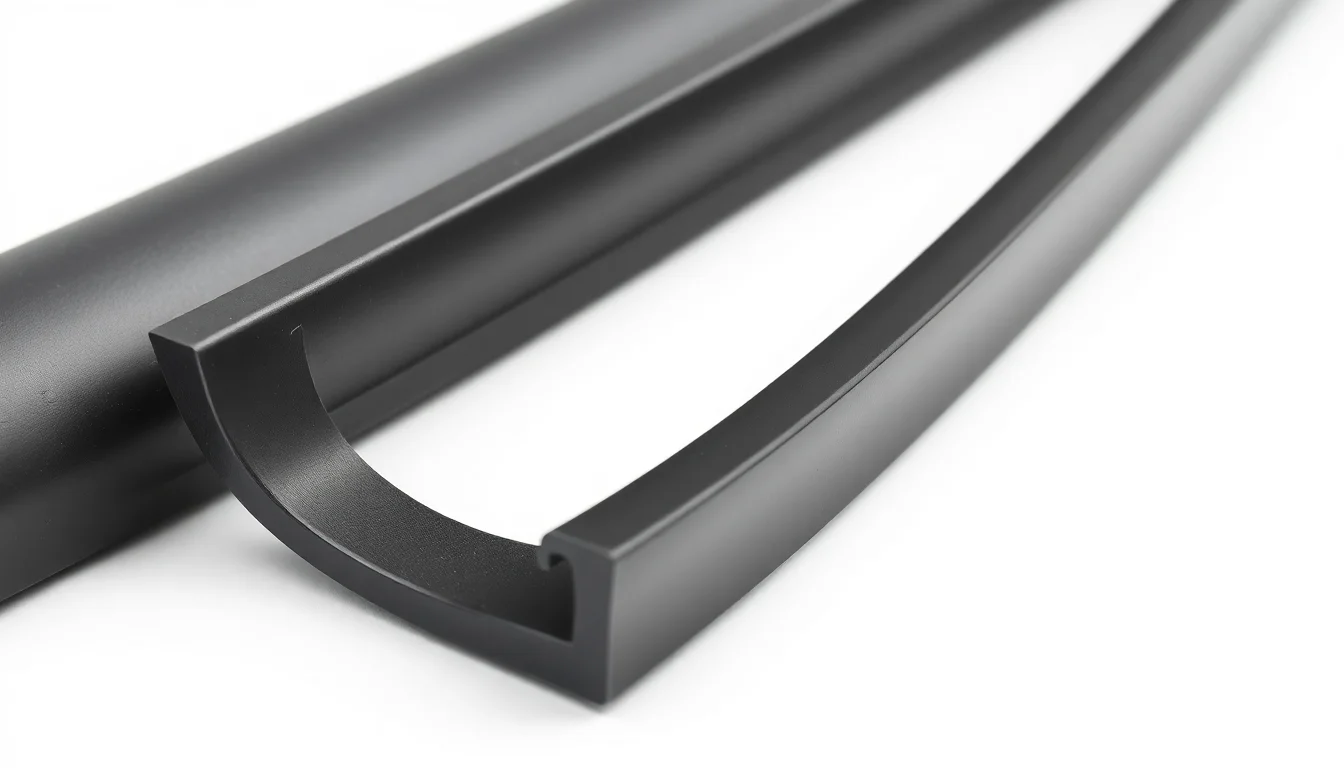
Material Science Deep Dive: High Temperature Resistant Rubber Seal Selection for B2B Specifiers
For overseas B2B project specifiers, OEM/ODM buyers, and trade wholesalers, selecting a high temperature resistant rubber seal requires verifiable material data—not generalities. This deep dive compares FKM, VMQ, EPDM, HNBR, and AEM elastomers across tensile strength (MPa), compression set (%), thermal aging (ASTM D573), oil/acid/alkali resistance (ISO 1817), and ozone resistance. All data reflects typical values for qualified compounds; actual performance depends on formulation, cure system, and extrusion tolerance.
Comparative Material Data: High Temperature Resistant Rubber Seals
| Material | Temp Range (°C) | Tensile Strength (MPa) | Compression Set % (70h @ 100°C) | Oil Resistance | Acid/Alkali Resistance | Ozone Resistance | Relative Cost |
|---|---|---|---|---|---|---|---|
| FKM (Fluoroelastomer) | -20 to 230 | 10–16 | 15–25 | Excellent | Good | Excellent | $$$$ |
| VMQ (Silicone) | -60 to 200 | 6–10 | 20–35 | Fair | Fair | Excellent | $$$ |
| EPDM | -40 to 150 | 8–14 | 20–30 | Poor | Good | Excellent | $$ |
| HNBR | -30 to 150 | 12–18 | 15–25 | Good | Fair | Good | $$$ |
| AEM | -40 to 175 | 8–12 | 20–30 | Good | Fair | Good | $$$ |
Test conditions: ASTM D573 (thermal aging), ASTM D395 (compression set), ISO 1817 (liquid resistance). Values are for 70 Shore A compounds. For application-specific testing, request a datasheet.
Tensile Strength and Thermal Aging
FKM and HNBR lead in tensile strength (10–18 MPa), critical for high-pressure sealing. VMQ and EPDM offer 6–14 MPa, suitable for static or low-pressure dynamic seals. Thermal aging per ASTM D573: FKM retains >80% tensile after 1000h at 200°C; VMQ retains >70% after 1000h at 180°C; EPDM retains >60% after 1000h at 125°C. For long-term aging years, FKM can exceed 20 years at 150°C, while EPDM typically achieves 10–15 years at 100°C.
Compression Set and Sealing Force
Compression set (ASTM D395, 70h @ 100°C) indicates elastic recovery. FKM and HNBR show 15–25%, VMQ 20–35%, EPDM 20–30%. Lower set means better sealing force retention. For high temperature resistant rubber seal applications above 150°C, specify FKM or VMQ with low set formulations. Durometer (Shore A) ranges: 50–90. Hardness affects extrusion tolerance; tighter tolerances (±0.1 mm) are achievable with 70 Shore A.
Oil, Acid, Alkali, and Ozone Resistance
FKM excels in oil and fuel (ISO 1817 volume swell <10% after 168h at 150°C). EPDM performs poorly in oil but excels in acid/alkali and ozone. VMQ offers moderate oil resistance but excellent ozone and weather resistance. HNBR balances oil and ozone. For chemical processing, FKM or EPDM depending on media. Ozone resistance: all elastomers except natural rubber are excellent; FKM and VMQ are superior.
Application-Specific Selection for High Temperature Resistant Rubber Seals
Automotive and Industrial Ovens
For temperatures up to 200°C, VMQ or FKM. FKM for oil exposure. For door sealing strips in industrial ovens, VMQ with 60 Shore A and ±0.15 mm tolerance is common. Flame retardancy per UL 94 V-0 available.
Chemical Processing and Acid Lines
EPDM for acid/alkali at up to 150°C. FKM for mixed chemicals. For cabinet seals in chemical cabinets, EPDM with 70 Shore A and compression set <25%.
High-Temp Silicone Series
Our silicone series includes VMQ compounds with 200°C continuous, 250°C peak. Tensile 8–10 MPa, compression set 20–30%. For WPC profiles, WPC profiles use EPDM or VMQ depending on temperature.
Vulcanization and Polymer Matrix Considerations
Peroxide-cured FKM and VMQ offer better compression set and thermal aging than sulfur-cured. Polymer matrix selection affects oil resistance. For high temperature resistant rubber seal, specify cure system: peroxide for VMQ, bisphenol for FKM. Extrusion tolerance: ±0.1 mm for dense profiles, ±0.2 mm for sponge.
Quality Control and Testing Protocols
We test per ASTM D573, ASTM D395, ISO 1817, ISO 3601. Batch traceability. Tensile strength, elongation, hardness, compression set. Ozone resistance per ASTM D1149. Flame retardancy per UL 94. Thermal aging years estimated via Arrhenius plots.
In our Hunan factory experience, a European OEM required FKM seals for 200°C oil lines. Initial EPDM failed at 150°C with compression set >40%. Switching to FKM with 70 Shore A and peroxide cure achieved 18% set after 70h at 200°C, extending service life to 15 years.
Frequently Asked Questions
What is your MOQ for high temperature resistant rubber seals?
MOQ is 500 meters for standard profiles, 1000 meters for custom compounds. For FKM, MOQ 300 meters due to material cost. We support trial orders.
What is the lead time?
Standard lead time 15–20 days after drawing approval. FKM and custom VMQ 20–25 days. Expedited 10 days available.
What extrusion tolerance can you achieve?
Dense profiles: ±0.1 mm to ±0.15 mm. Sponge: ±0.2 mm. Per ISO 3601 for O-rings: ±0.08 mm. We provide PPAP.
How are seals packed?
Coils in PE bags, cartons, or wooden cases. Custom labeling. Desiccant for VMQ.
Do you provide free samples?
Yes, 1–2 meters free for standard profiles. Custom compounds: sample fee refundable on bulk order. Freight collect.
| Parameter | FKM | VMQ | EPDM | HNBR |
|---|---|---|---|---|
| Temp Range (°C) | -20 to 230 | -60 to 200 | -40 to 150 | -30 to 150 |
| Tensile (MPa) | 10–16 | 6–10 | 8–14 | 12–18 |
| Compression Set % | 15–25 | 20–35 | 20–30 | 15–25 |
| Shore A | 60–90 | 40–80 | 50–90 | 60–90 |
| Tolerance (mm) | ±0.10 | ±0.15 | ±0.15 | ±0.10 |
| Oil Resistance | Excellent | Fair | Poor | Good |
| Acid/Alkali | Good | Fair | Good | Fair |
| Ozone | Excellent | Excellent | Excellent | Good |
| Aging Years @ Temp | 20 @ 150°C | 15 @ 150°C | 10 @ 100°C | 15 @ 120°C |
Send your CAD drawing for a 24-hour quote.
Need a Custom Quote?
Send your CAD drawing or specs (material, hardness, profile, temperature range, MOQ) — our engineering team will respond within 24 hours.